

Clear Aligners & Orthodontic Planning
Move teeth with a plan for the bite, the roots, and retention afterward.
Clear aligners are one orthodontic tool, not a universal shortcut. Suitability depends on the tooth movements required, gum and bone health, existing dental work, bite, growth, patient cooperation, and direct professional monitoring.
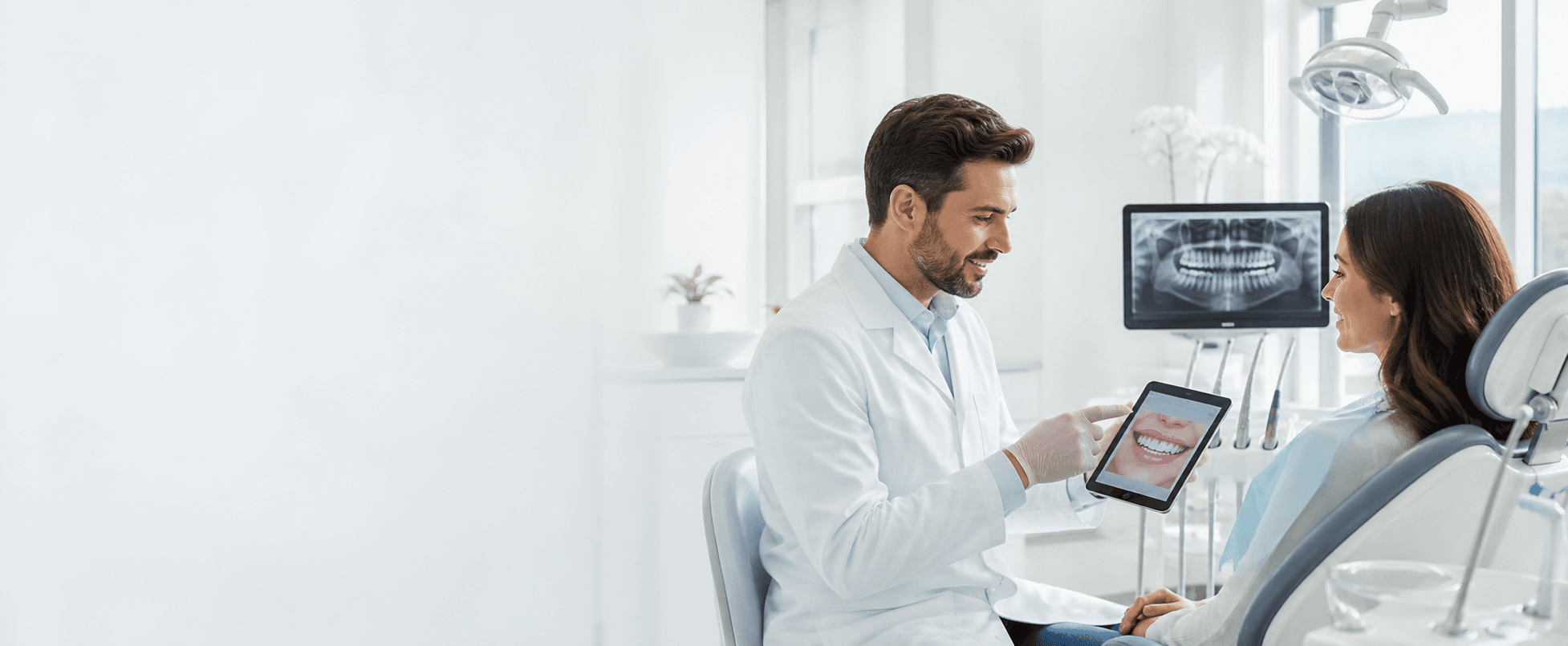
Alignment is biological treatment
The appliance is selected after the movement is understood.
Orthodontic treatment can address crowding, spacing, protrusion, and bite relationships. Clear removable aligners may suit many cases, while fixed braces, additional appliances, combined approaches, restorative care, or specialist referral may be more appropriate for others.
Planning may use examination, photographs, scans or models, and radiographs when indicated. Oral hygiene, decay, gum inflammation, bone support, impacted or missing teeth, previous restorations, root position, jaw relationships, and patient expectations should be considered before movement begins.
A digital animation previews intended movement; it does not guarantee biological response, exact timing, or the final clinical result.
What matters
Professional care, translated into practical detail.
Complete records
Clinical findings, bite records, photographs, scans, and appropriate radiographs help define the problem and movement limits.
Plan beyond visible crowdingAppliance selection
Aligners, braces, elastics, attachments, space creation, or combined treatment may be considered according to the movement.
Choose the tool after diagnosisCooperation and review
Wear, hygiene, appointment attendance, lost or damaged appliances, and biological response can change progress.
Treatment is actively monitoredRetention
Teeth can move after active treatment. A written retainer and review plan protects the corrected position.
Retention is part of treatmentA supervised pathway
Six stages from alignment concern to retained result.
Exact stages and duration vary. Healthy teeth and gums, realistic movement goals, and ongoing clinical review are essential.
- 01Name the complete problem
Define the concern and goal
Discuss crowding, spacing, bite, function, appearance, previous treatment, and what the patient wants to change.
- 02Health before movement
Confirm dental readiness
Assess decay, gum health, bone support, hygiene, restorations, missing teeth, and any urgent care needed first.
- 03Evidence before simulation
Build diagnostic records
Use the records needed to understand tooth and root position, bite, facial context, and treatment limits.
- 04One tool does not fit all
Compare appliance strategies
Explain aligners, braces, adjuncts, alternatives, likely cooperation, risks, compromises, and referral when appropriate.
- 05Review the biology
Monitor active movement
Check tracking, hygiene, gum health, bite, appliance fit, patient experience, and whether the plan needs adjustment.
- 06Hold what was achieved
Finish and retain
Confirm the result, coordinate any restorative work, provide retainers, and explain wear, replacement, and review.
Cosmetic sequence
Alignment may reduce the amount of restorative change needed later.
When position contributes to the aesthetic concern, orthodontic movement may create a more favorable foundation for whitening, bonding, veneers, implants, or other restorations. The sequence should be coordinated so tooth movement and restorative design support one another.
- Treat active decay or gum disease first
- Ask why aligners or braces suit the intended movement
- Understand possible attachments, elastics, or space creation
- Clarify how restorative work affects the sequence
- Receive a retainer wear and replacement plan
Before accepting a simulation
Ask how the proposed movement will be examined, delivered, and retained.
Planning questions
- What diagnosis and bite problem are being treated?
- Are my teeth and gums ready for movement?
- Which records and radiographs are needed?
- Why is this appliance appropriate for my case?
Ownership questions
- What wear and visit schedule is expected?
- What changes could require refinement?
- Which risks and limitations apply?
- What retention plan follows treatment?
This guide does not confirm aligner suitability, duration, extraction need, attachment use, or outcome. Orthodontic tooth movement requires individualized examination, planning, and direct professional supervision.
Are clear aligners suitable for every orthodontic problem?
No. Some movements and bite problems may be treated predictably with aligners, while others may need braces, adjuncts, combined care, or specialist treatment.
Can I straighten only the front teeth?
A limited aesthetic goal still requires assessment of the full bite, roots, gums, and available space. Moving visible teeth can affect contacts and function elsewhere.
Why must decay and gum disease be controlled first?
Orthodontic appliances can make cleaning more demanding, and moving teeth in an unhealthy environment may increase the risk of damage. Readiness should be confirmed before treatment.
Will I need retainers forever?
Teeth can continue to move after treatment. Retainer type, wear schedule, review, and replacement are individualized, but long-term retention is commonly part of protecting the result.
Move with purpose
Choose the movement plan before choosing the invisible appliance.
Begin with a complete assessment, then compare the suitable appliance, risks, cooperation, restorative sequence, and retention responsibilities.