

Missing-Tooth Replacement Options
Compare the space, the support, and the solution you can maintain over time.
A missing tooth can be managed in several ways. The right comparison includes the reason for loss, neighboring teeth, gum and bone conditions, bite, appearance, health, hygiene, treatment time, repairability, and patient priorities.
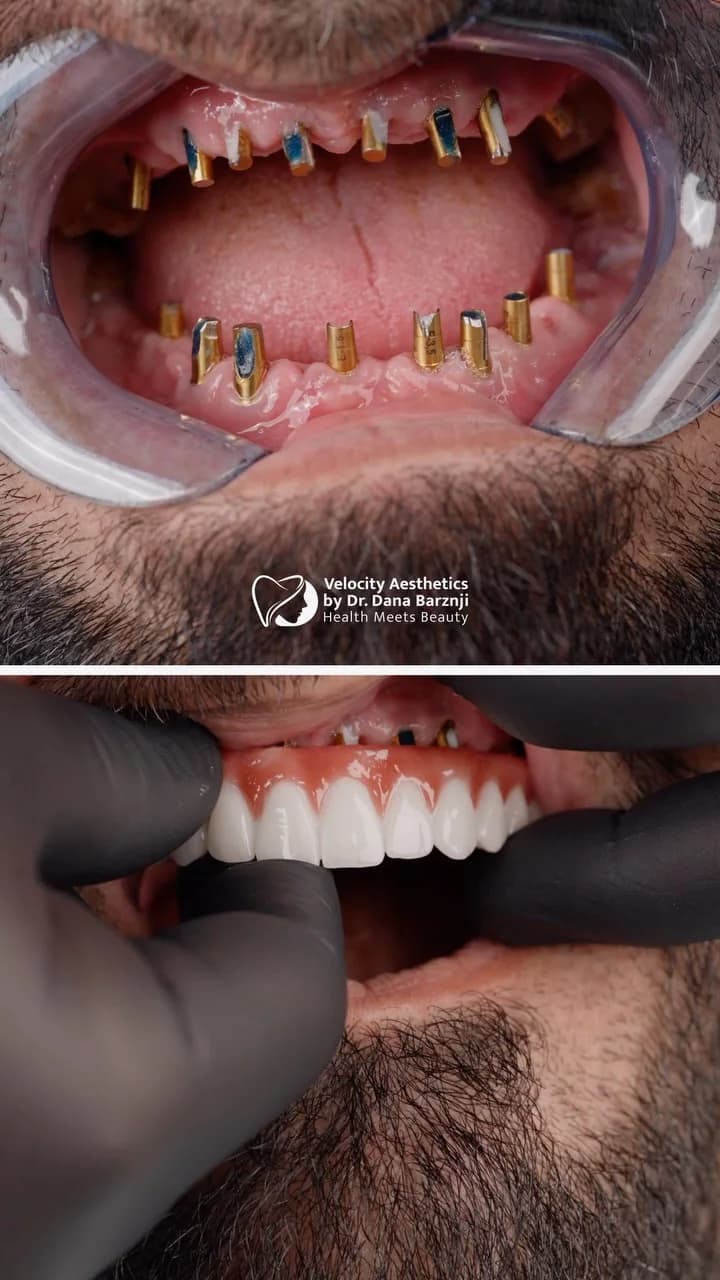
More than implant versus bridge
Replacement should restore useful function without ignoring the structures that support it.
Options may include monitoring the space, orthodontic closure or redistribution, a tooth-supported bridge, a removable partial or complete denture, an implant-supported crown or bridge, or a staged combination. Not every option applies to every space or patient.
A conventional bridge may involve neighboring teeth. An implant involves surgery, healing, and ongoing tissue maintenance. A removable restoration has its own fit, support, adaptation, and cleaning needs. Existing teeth may sometimes be preserved to support a solution, while severely compromised teeth may change the overall design.
The most sophisticated option is the one that fits the diagnosis, priorities, maintenance ability, and long-term plan, not automatically the most complex one.
What matters
Professional care, translated into practical detail.
No immediate replacement
Some spaces may be monitored or managed orthodontically, but possible effects on chewing, position, appearance, and future options should be discussed.
Doing nothing is still a decisionFixed bridge
A bridge can replace one or more teeth using natural teeth or implants for support, with implications for preparation and cleaning.
Evaluate every support toothRemovable restoration
Partial or complete dentures can restore multiple spaces and require adaptation, hygiene, fit checks, and repair or relining over time.
Removable does not mean simpleImplant-supported option
Implants may avoid preparing adjacent teeth in selected cases but require surgical suitability, restorative planning, healing, and maintenance.
Plan the final tooth firstA fair comparison
Six questions that turn a missing space into a complete plan.
The sequence changes when infection, extractions, healing, gum treatment, orthodontics, grafting, or restoration of other teeth is needed first.
- 01Start with the cause
Understand why the tooth is missing
Review disease, trauma, development, previous treatment, current symptoms, and whether any tooth can still be preserved.
- 02More than the gap
Assess the complete space
Examine neighboring and opposing teeth, gums, bone, bite, appearance, speech, cleaning access, and available room.
- 03The plan must be livable
Clarify patient priorities
Discuss fixed or removable preferences, surgery, treatment time, appearance, comfort, maintenance, budget, and future flexibility.
- 04Use the same criteria
Compare appropriate designs
Explain monitoring, orthodontic, bridge, denture, implant, and combined options that genuinely apply.
- 05Protect daily function
Plan temporary and staged care
Define how the space will be managed during healing, laboratory work, movement, or multi-visit treatment.
- 06Support determines longevity
Maintain every supporting structure
Provide cleaning, review, repair, fit, bite, and replacement guidance for the selected design.

Support changes the design
One missing tooth and many missing teeth are different planning problems.
As tooth loss becomes more extensive, the location and condition of the remaining support matter increasingly. A coordinated plan may need to balance natural teeth, implants, removable components, bite support, speech, appearance, hygiene, and the possibility of future change.
- Ask which options genuinely apply to your anatomy
- Understand effects on neighboring teeth
- Compare fixed and removable cleaning demands
- Clarify temporary teeth and healing stages
- Plan repairs, reviews, and future replacement
Compare like with like
Review function, intervention, timeline, maintenance, and uncertainty for every option.
Clinical comparison
- What supports the replacement?
- Which teeth or tissues will be changed?
- What healing or preparatory care is needed?
- How does the option affect the bite and cleaning?
Practical comparison
- Is it fixed or removable?
- What temporary option is available?
- What maintenance and repairs are expected?
- How could future dental change affect it?
This page does not establish that an implant, bridge, denture, orthodontic option, or no replacement is appropriate. Suitability requires examination and case-specific discussion of benefits, risks, alternatives, and maintenance.
Is an implant always the best replacement for a missing tooth?
No. Implants can be valuable in selected cases, but anatomy, health, healing, gum condition, maintenance, neighboring teeth, bite, timing, and patient preferences may favor another option.
Does a bridge always require cutting healthy teeth?
Conventional tooth-supported bridges often require preparation of supporting teeth, but designs vary. Existing restorations, tooth condition, span, bite, and alternative options should be assessed.
Can a denture be a long-term option?
Yes, removable partial or complete dentures may be appropriate for some patients. Fit and oral tissues can change over time, so reviews, adjustments, relining, repair, or replacement may be needed.
Can I leave the space empty?
Sometimes monitoring is reasonable, while other spaces may affect chewing, position, appearance, or future treatment. Ask what is likely in your particular location and bite.
Replace with context
Choose the support system, not only the visible tooth.
Compare the realistic options using the same clinical and practical criteria, then select the pathway you can complete, clean, review, and maintain.